
From Pécs to Korea: A Student’s Experience with the Pannonia Scholarship

Through the Pannonia Scholarship Programme, students of the University of Pécs have the opportunity to study abroad and gain international experience. Samuel Tòth, a final-year International Relations student, spent a semester studying in South Korea and shared his experience with us
Can you briefly introduce yourself and tell us what you study at the University of Pécs? 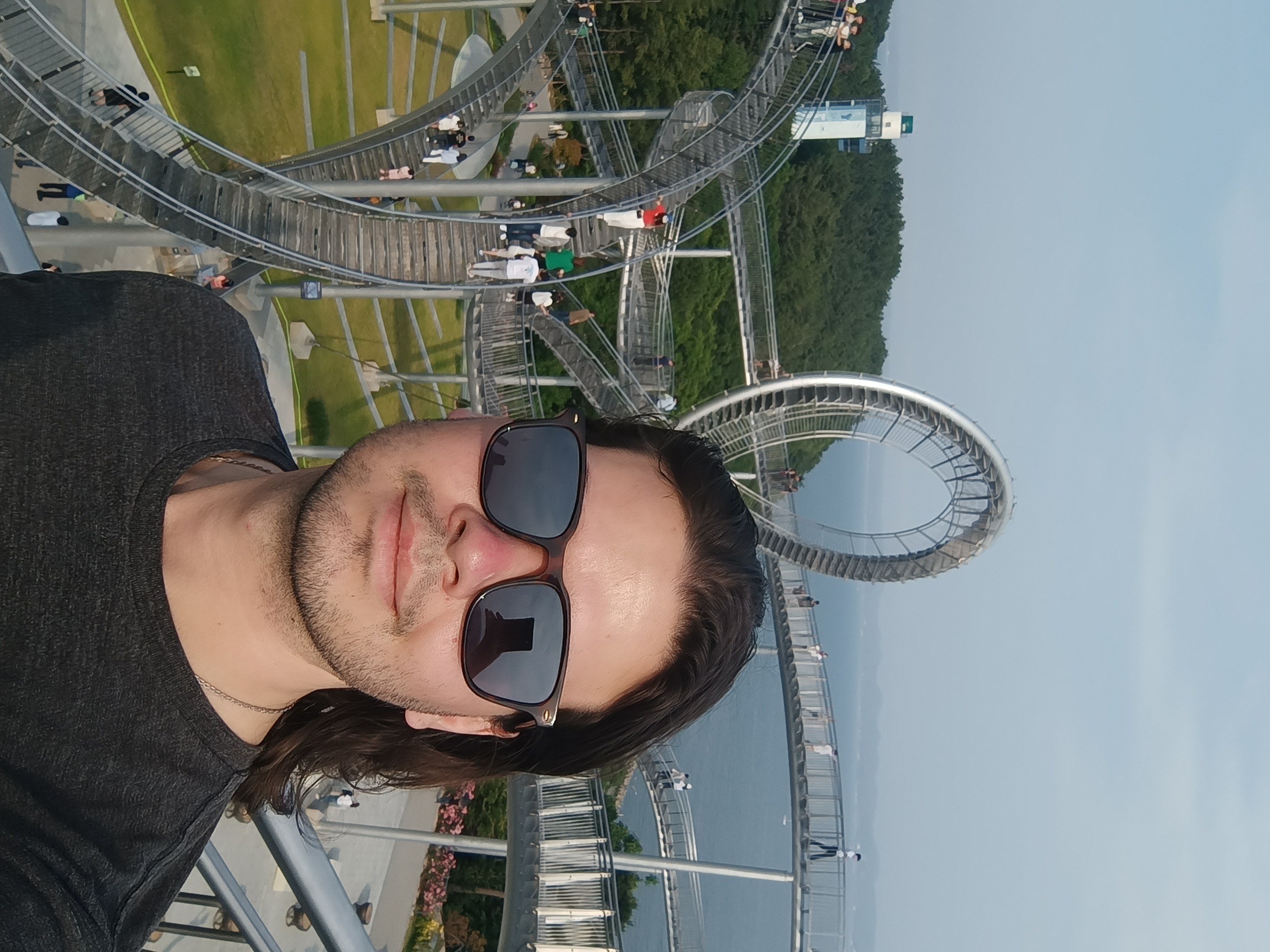
My name is Samuel Tòth. I started my studies three years ago, and this is my final semester at the moment in the undergraduate program. I study International Relations. It really goes with my interests because I have grown up in the Middle East almost all my life, and I really wanted to find a good international community here in Pécs. I believe that studying international relations really helps with getting experiences in this field. I study in Pécs because my family originates from here and we have family members in the area, so I have places where I can stay. That is why I chose Pécs as my place to study originally.
How did you first hear about the Pannonia Scholarship and what motivated you to apply?
I heard that there was going to be an information session about the Pannónia Scholarship where they explained how it works and what you need to do to successfully apply and move to another country. I decided to join the session and see what it was like. The speakers were really helpful and shared a lot of useful information. I also really wanted to step out of my comfort zone a little bit. That is one of the reasons why I chose Korea, because it is very far away and I had never been that far from my family or friends before.After attending this session, I decided that I was going to try. I applied to Korea and I got accepted. After that, there was no going back, it was decided that I was going.
Since you studied in Korea, can you talk more about your experience there and the things that surprised you the most?
There were a lot of new experiences that I could mention. There were many cultural differences compared to Europe and the Middle East.
My general experiences are very positive. I think Korea is a wonderful place with really kind people. One of the negatives I can mention is probably the time zone difference. That was a big shock, because it was really difficult to communicate with my family members and friends. We had about a nine-hour time difference. When it was morning in Europe, in Korea it was already turning into night, so it was not easy to manage.
Almost everything surprised me. The food is very different, and the people’s mentality is also very different. I was really surprised by how the older generation lives a very healthy lifestyle compared to the European lifestyle. Everybody seemed very sporty and stylish. The food was also a big shock. I really love East Asian foods like Japanese sushi and Korean and Chinese food, but after a while, after only eating these foods, I started to miss European food from home.
Another really good experience was being in a truly international environment again. Since I moved home from the UAE, I was mostly around Hungarians. But in Korea I could use my international knowledge again, practice my English, and make friends from many different nationalities and countries.
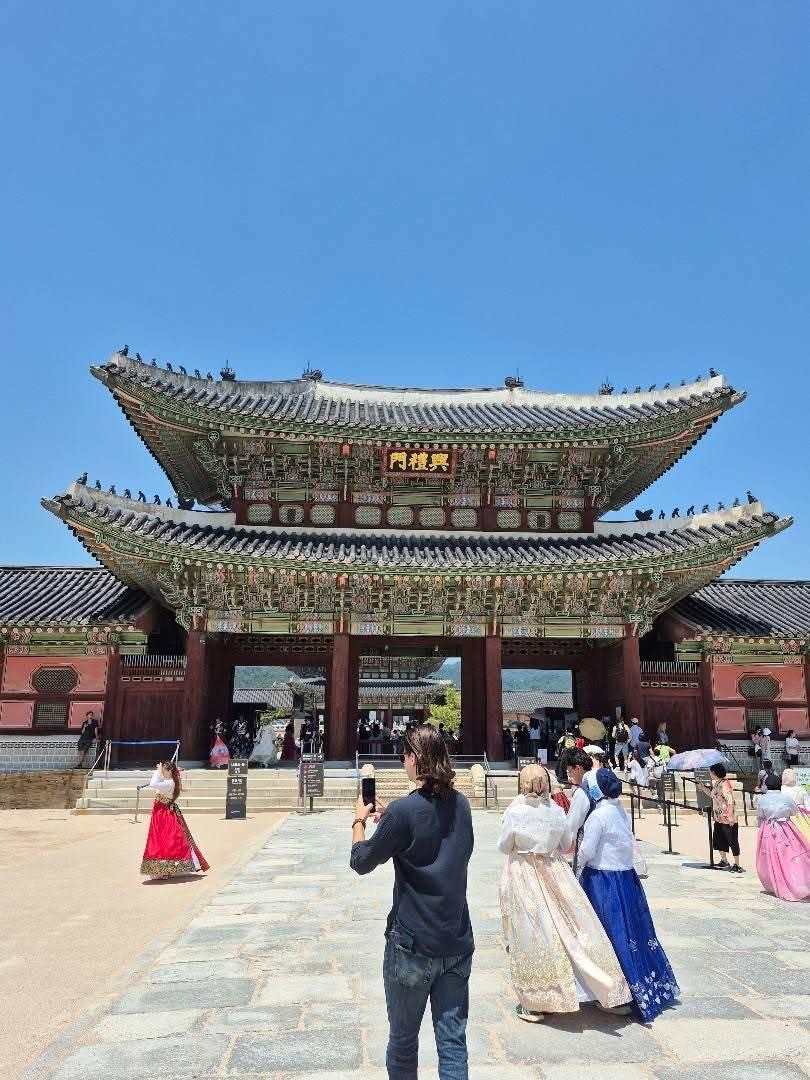 What was the most memorable cultural experience you had during your time there?
I went to Kyungpook National University in Daegu, and the university was very helpful in giving us cultural experiences. We did a lot of tours around different cities in Korea and visited many museums.
One time we went to a plum field in the Korean mountains. It was not plum harvesting season yet, but they showed us around and we ate really amazing Korean delicacies made there by the locals. The local women from the village prepared really amazing food for us.
After that we visited a very famous museum where we could see many ancient artifacts from Korea and from that region. Culturally, I would say this was one of the best experiences because we could see different aspects of the country.
How did this experience influence you academically and personally?
Academically, to be honest, it did not influence me very much, because the Korean system is very similar to the European system. It does run a bit more in an American style in terms of grading and classes, and the campus felt very American.
However, it was interesting to see how lectures are taught in English, because I study in Hungarian here. I could see how American professors teach compared to Hungarian professors.
Personally, it influenced me in a very good way. After traveling in Korea, I realized that I can travel anywhere in the world. Since I chose one of the countries that is the furthest away from Hungary, it gave me a sense of ambition to go elsewhere and explore more, knowing that everything will be fine and I can manage it on my own.
What advice would you give to students who are thinking about applying for the Pannonia Scholarship?
My advice would be to try to manage everything beforehand. One of the problems I ran into was that I did not start learning about the program and the procedures early enough. Because of that, I had to rush every day to manage the paperwork and get all the applications in on time.
One of the main things I would advise is to start researching and preparing your paperwork as early as possible so you do not miss any deadlines.
If you had to describe your experience in Korea in one sentence, what would it be?
“A beautiful country, but very far away."
Interview by Malak Mohamed Abdellatef Mohamed


Contact
+36 72 503 600/ 64127 or 64126
Pécsi Tudományegyetem | Kancellária | Informatikai és Innovációs Igazgatóság | Portál csoport - 2020.